

02 Nov Nature’s Crown Jewels
Rare Granites and Extraordinary Exotic Stone
Lemurian Blue, Bahia Blue, Volga Blue, and Amazonite bring remarkable color and character to luxury interiors.
Some stones quietly complement a room. Others become the reason the room is remembered. Electric-blue flashes, pools of cobalt, and expanses of turquoise give exotic natural stone an unmistakable presence. Their appeal begins with appearance, but their value also reflects availability, slab quality, and the work required to bring them from the quarry into a finished interior.
Lemurian Blue
Quarried in Madagascar, Lemurian Blue combines a dark, often green-toned background with luminous blue flashes. Its labradorite crystals respond to changes in light and viewing angle, giving the surface extraordinary depth.
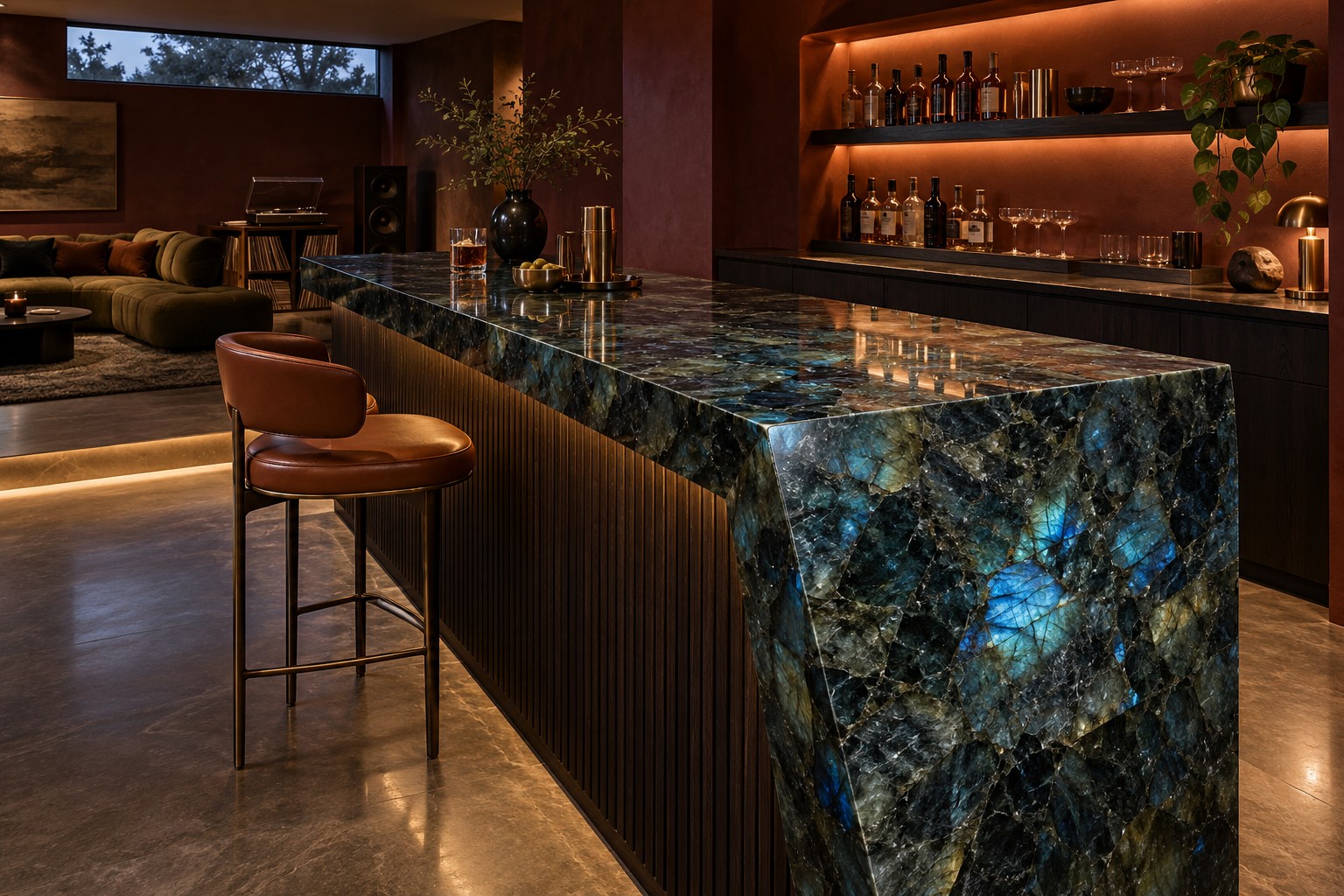
Lemurian Blue cocktail bar with smoked wood and warm lounge lighting.
From one position, a slab may appear dark and restrained. A few steps to the side can reveal brilliant areas of blue. Carefully positioned lighting reveals its crystalline details, while understated surrounding finishes allow the stone to remain the focal point.
Bahia Blue
The Drama of Natural Cobalt
Known as Bahia Blue, Blue Bahia, or Azul Bahia, this Brazilian stone is celebrated for its saturated blue coloring. It originates in the state of Bahia, and its distinctive color comes from sodalite. Commonly sold as granite, it is geologically a sodalite syenite. Blue Bahia is among Brazil’s rare, high-value blue architectural stones.
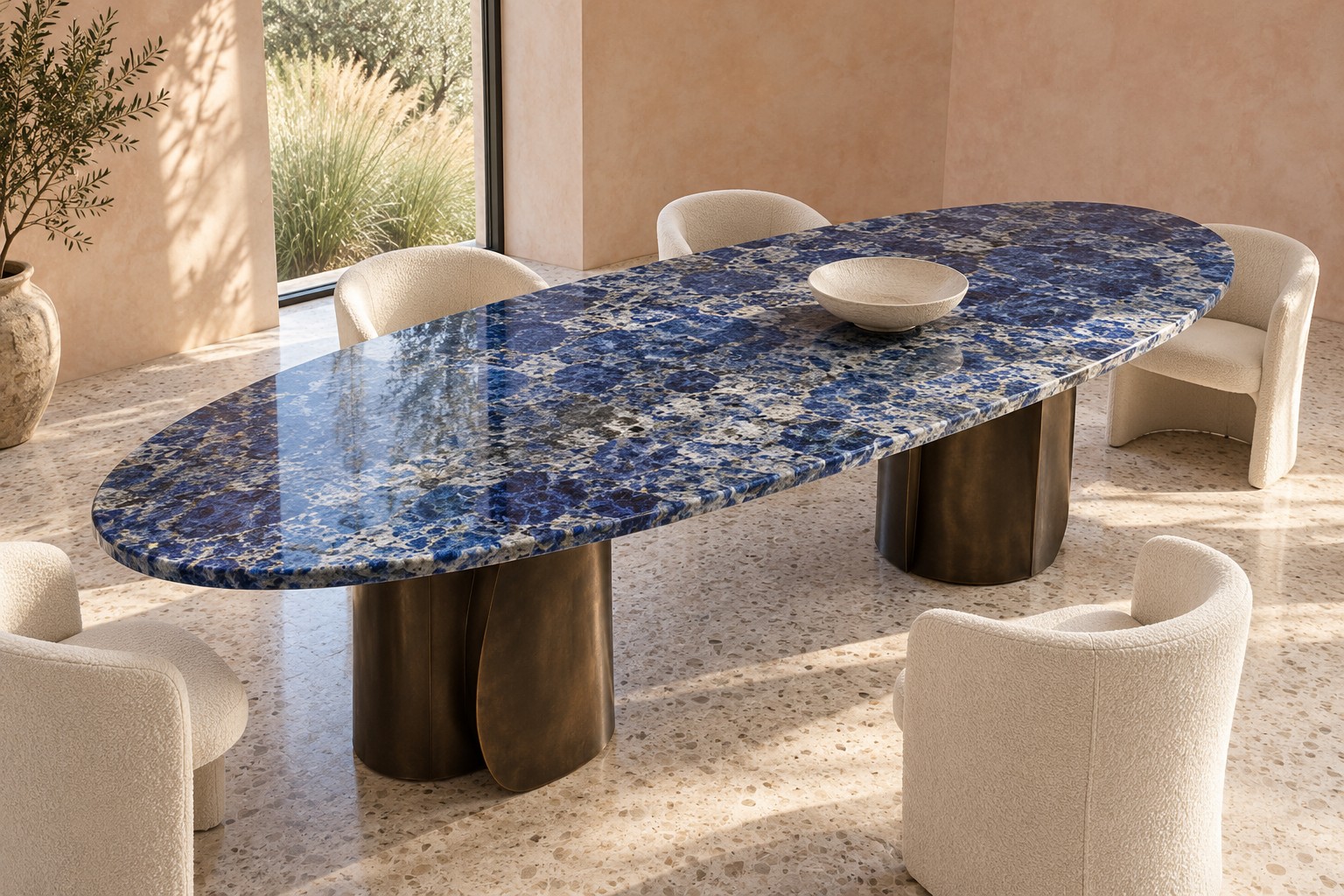
Blue Bahia oval dining table with sculptural bronze supports.
Its appeal lies in the interplay of rich blue mineral areas with lighter and darker details. Across a full slab, these variations create a composition that can feel almost painterly.
A dining tabletop with a slender metal base, a generous vanity against warm plaster, or a reception counter in a quiet entrance hall can showcase its color beautifully. With a material this expressive, the slab itself can guide the room’s palette.
Volga Blue
Brilliance Against a Dark Background
Quarried in Ukraine, Volga Blue features a gray-black background punctuated by sparkling blue labradorite crystals. Although commonly marketed as granite, it is geologically an anorthosite. Its crystalline flashes give a dark surface unexpected depth and movement.
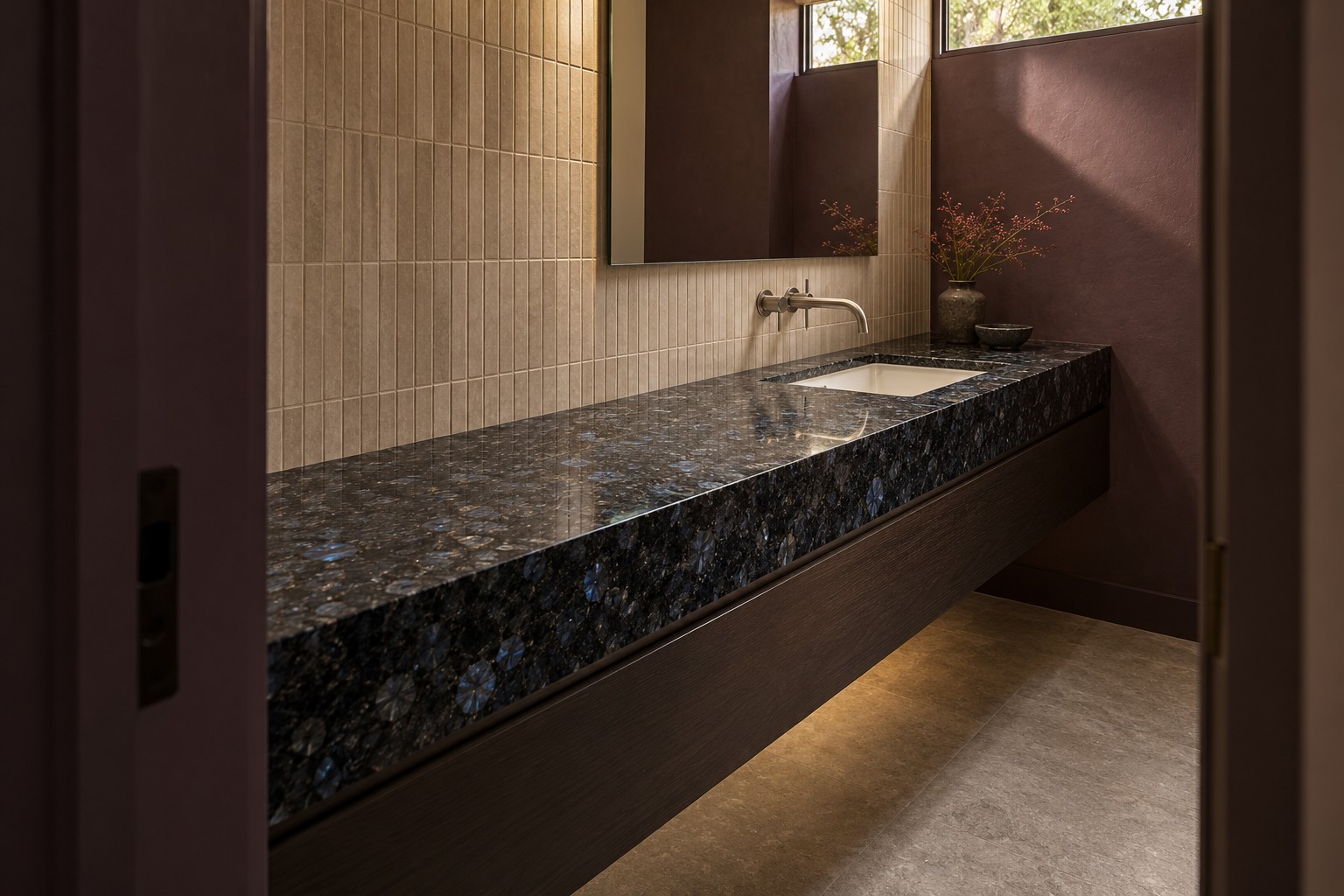
Volga Blue floating vanity with warm tile and brushed nickel fixtures.
Volga Blue suits interiors that call for a darker palette with an element of surprise. The blue can appear subtle under some lighting and become more pronounced as the viewing angle changes.
Consider it for a long dining table beneath sculptural lighting, a floating powder-room vanity, or a bar framed by warm wood cabinetry. Brushed nickel can echo its cooler tones, while bronze introduces warmth.
Volga Blue offers an exotic appearance, though its availability and price should be evaluated separately from exceptionally rare selections such as Bahia Blue. Crystal size, distribution, and visual intensity make the individual slab especially important.
Amazonite
Turquoise with Architectural Presence
Amazonite expands the palette into turquoise and emerald green, often interrupted by cream, taupe, and dark mineral areas. Its bold contrasts and crystalline appearance give it a striking presence across large surfaces. Commercial classifications vary: supplier descriptions use both granite and quartzite terminology, so the exact material should be verified when selecting a slab.
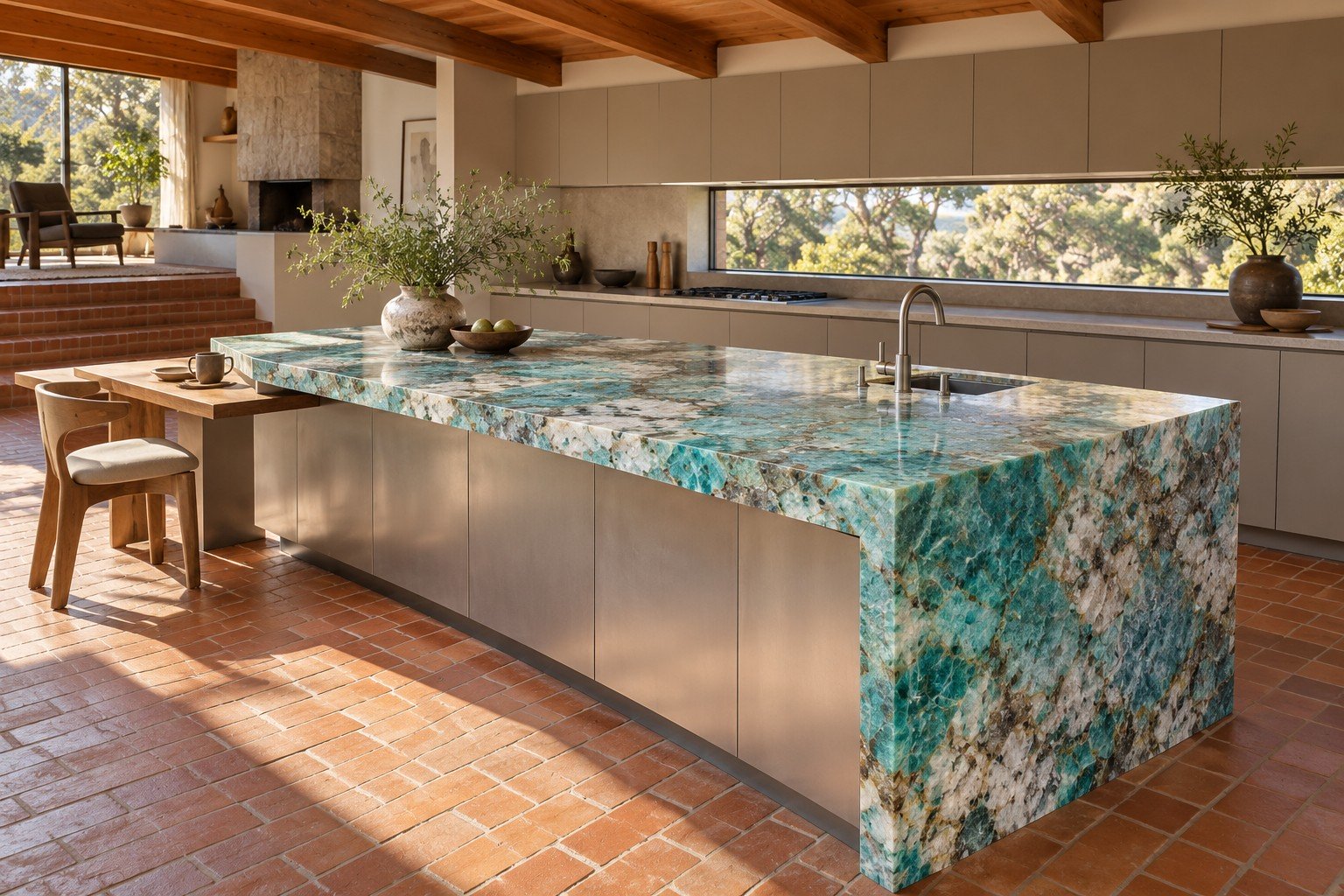
Amazonite kitchen island with a timber breakfast ledge and sunlit terracotta floors.
Its appeal is immediate. Where dark blue stones invite a closer look, Amazonite can establish the entire mood of a room from across the space.
Picture a broad coffee table in a softly furnished living room, a feature wall behind a freestanding bathtub, or a kitchen island surrounded by pale oak and warm white cabinetry. In each setting, the stone supplies much of the color and visual interest.
For a balanced design, choose surrounding finishes from the quieter shades within the slab. This allows its turquoise and green areas to remain vivid without making the room feel crowded.
What Makes an Exotic Slab Expensive
A premium stone’s value involves more than its name. Limited availability, desirable coloring, usable slab dimensions, and fabrication requirements all influence the final cost.
A slab with exceptional blue flashes or a particularly balanced turquoise pattern may differ substantially from another selection sold under the same name. Large projects can also require several compatible slabs, making continuity an important part of the selection process.
Fabrication deserves equal attention. Seam placement, edge profiles, reinforcement, and the layout of individual pieces affect both the finished appearance and the amount of material required.
The most useful comparison is between specific slabs and complete project estimates—not material names alone.
Choose the Slab Then Design the Room
A small sample cannot fully represent an expressive natural stone. View the complete slab, identify the areas you want to feature, and review the cutting layout with your fabricator before work begins.
For Lemurian Blue and Volga Blue, examine the surface from several angles. For Bahia Blue and Amazonite, pay particular attention to color distribution and how the pattern will appear across the finished pieces.
Because commercial stone names cover different geological materials, confirm the selected slab’s suitability, care requirements, and sealing needs with the supplier and fabricator.
Discover Extraordinary Stone at Omega Natural Stone
Whether you are drawn to Lemurian Blue’s shifting brilliance, Bahia Blue’s saturated cobalt, Volga Blue’s dark crystalline sparkle, or Amazonite’s vivid turquoise, the right selection begins with the individual slab.
Contact Omega Natural Stone in Farmers Branch to discuss exotic stone selections, current availability, and possibilities for your next project.
Omega Natural Stone — The Stone Boutique.
Images are AI-generated installation concepts. Stone patterns are illustrative and do not represent exact Omega inventory slabs or completed projects.