

21 Nov Italian Marble from Roman Quarries to Modern Interiors
The white marble of Michelangelo’s David and the rose-streaked stone of Milan’s Duomo show how differently Italian marble can read. In Florence, a sculptor gave a single block the appearance of living skin. In Milan, builders brought stone down rivers and canals to construct an entire cathedral. The same variety is visible in Italian slabs today.
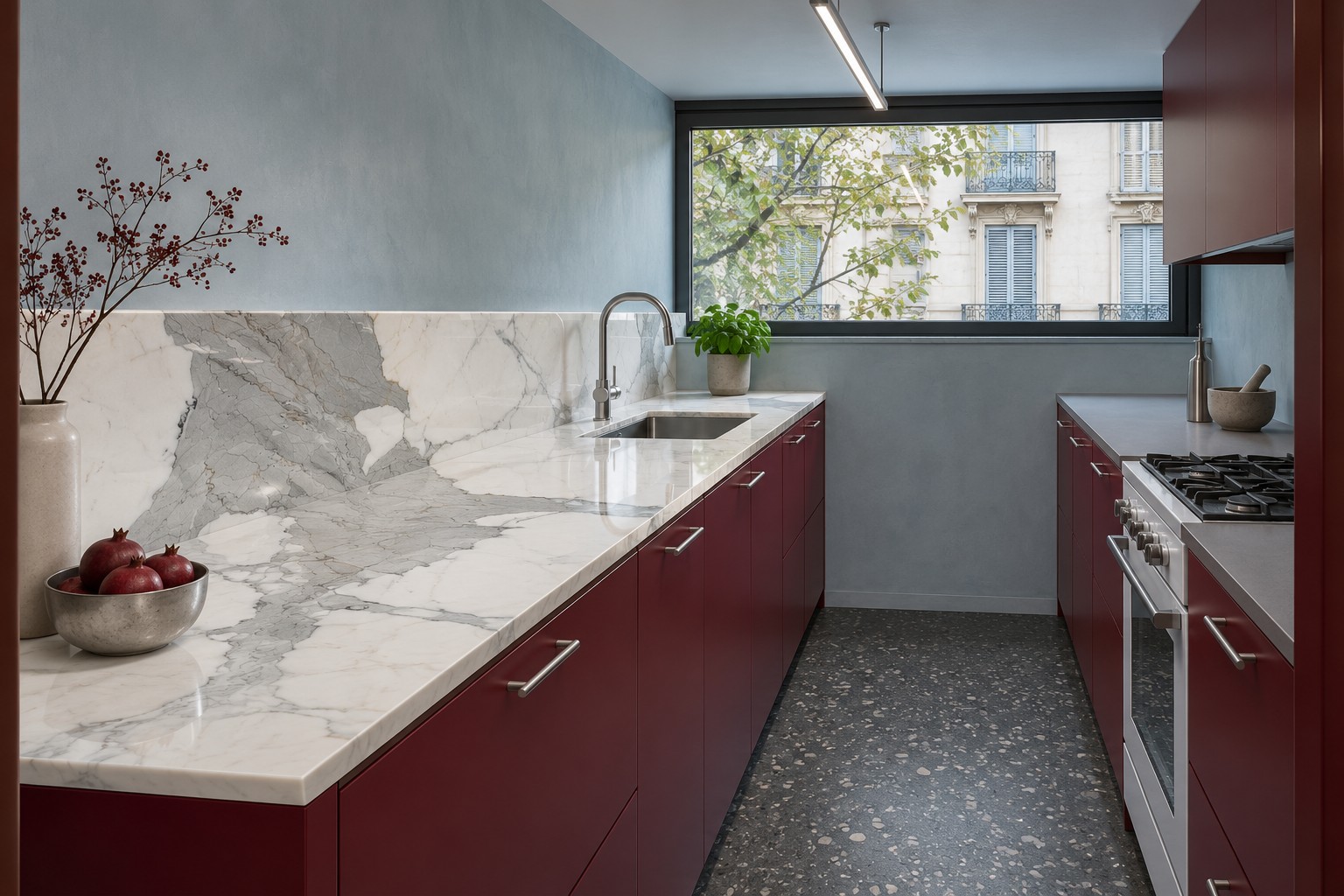
Calacatta Bettogli Extra in a Milanese-inspired galley kitchen
A history carved in stone
By the first century BCE, the Romans were quarrying marble around present-day Carrara in northern Tuscany’s Apuan Alps. The nearby port of Luna, now Luni, helped carry the stone into the Roman world for architecture and sculpture.
In 1387, Gian Galeazzo Visconti granted Milan’s cathedral builders access to the Candoglia quarry in Piedmont. Blocks traveled along the Toce River, across Lake Maggiore and through canals into Milan. The quarry still supplies the Duomo’s restoration work.
During the Renaissance, Michelangelo carved the Pietà in St. Peter’s Basilica from a single block of Carrara marble. His David, unveiled in Florence in 1504, shows how finely white marble can capture the contours of a face, the tension in a hand and the play of light across skin.
The famous whites of Tuscany
Bianco Carrara. A white to pearl-gray background and soft, feathery veins bring gentle movement to long vanities and backsplashes.
Statuario. A luminous white background often carries sharply defined gray veins. That contrast gives a full-height shower wall or fireplace surround a strong focal point.
Calacatta. Bold, widely spaced veins give this family of Apuan marbles its presence. Calacatta Borghini can combine gray and gold in a single slab, while Calacatta Bettogli takes its name from Monte Bettogli in Carrara.
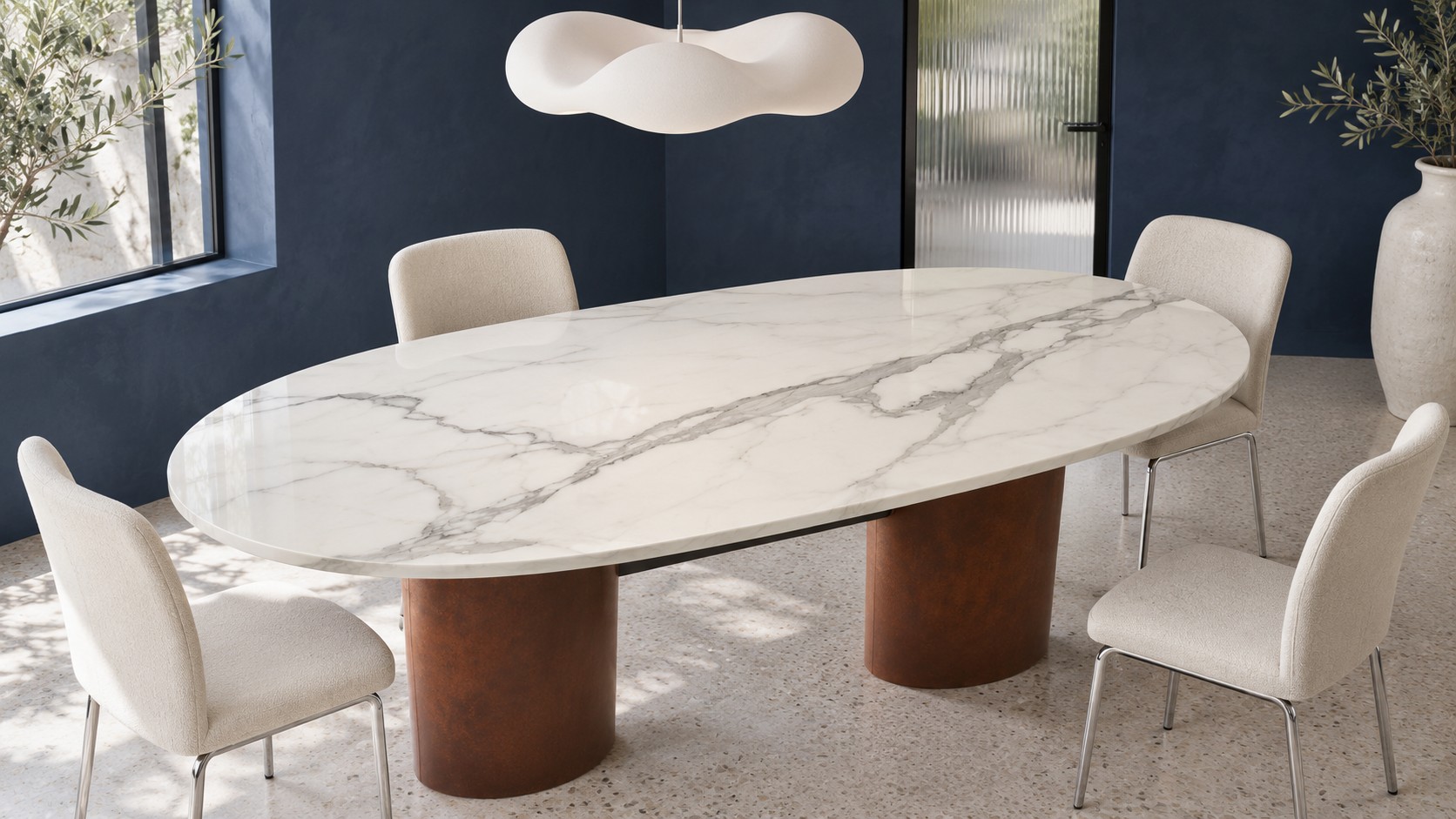
Calacatta Borghini dining table
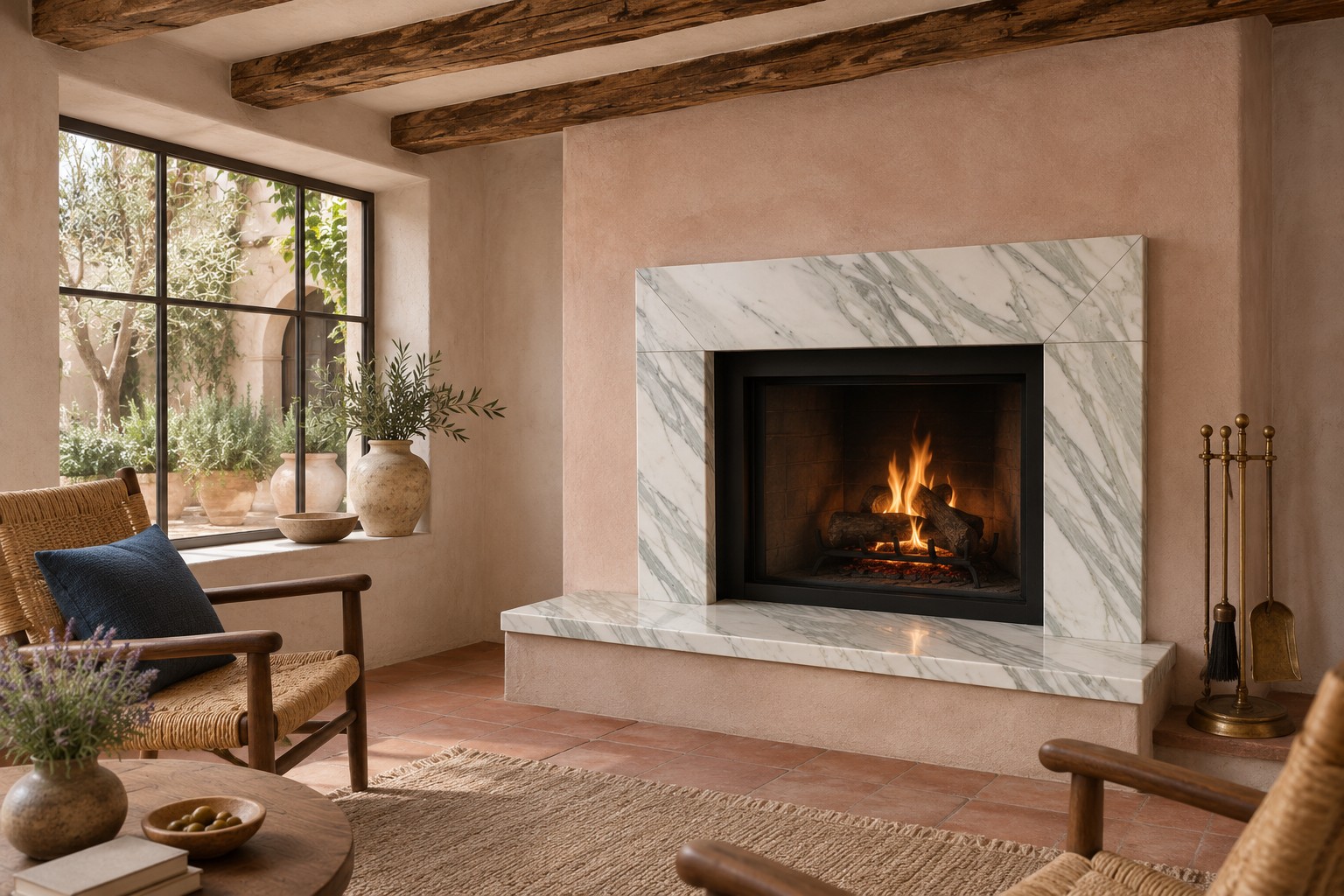
Calacatta Bettogli fireplace surround
From burgundy to smoky gray
Calacatta Viola. The Italian variety from the Vagli area of Tuscany has deep burgundy and violet markings around pale fragments. A single slab can set the palette for a powder room or bar.
Arabescato Corchia. From Monte Corchia in Tuscany, this marble has pale shapes framed by a looping network of gray veins. Its pattern is easy to appreciate across a broad countertop or wall.
Bardiglio. This marble from the Carrara district has a smoky to blue-gray background. Its tonal veining gives flooring and fireplace surrounds a quieter depth.
Botticino Classico. Quarried near Brescia in Lombardy, this warm ivory-beige stone has subtle markings and occasional fossil details. It pairs naturally with warm woods, brass and plaster.
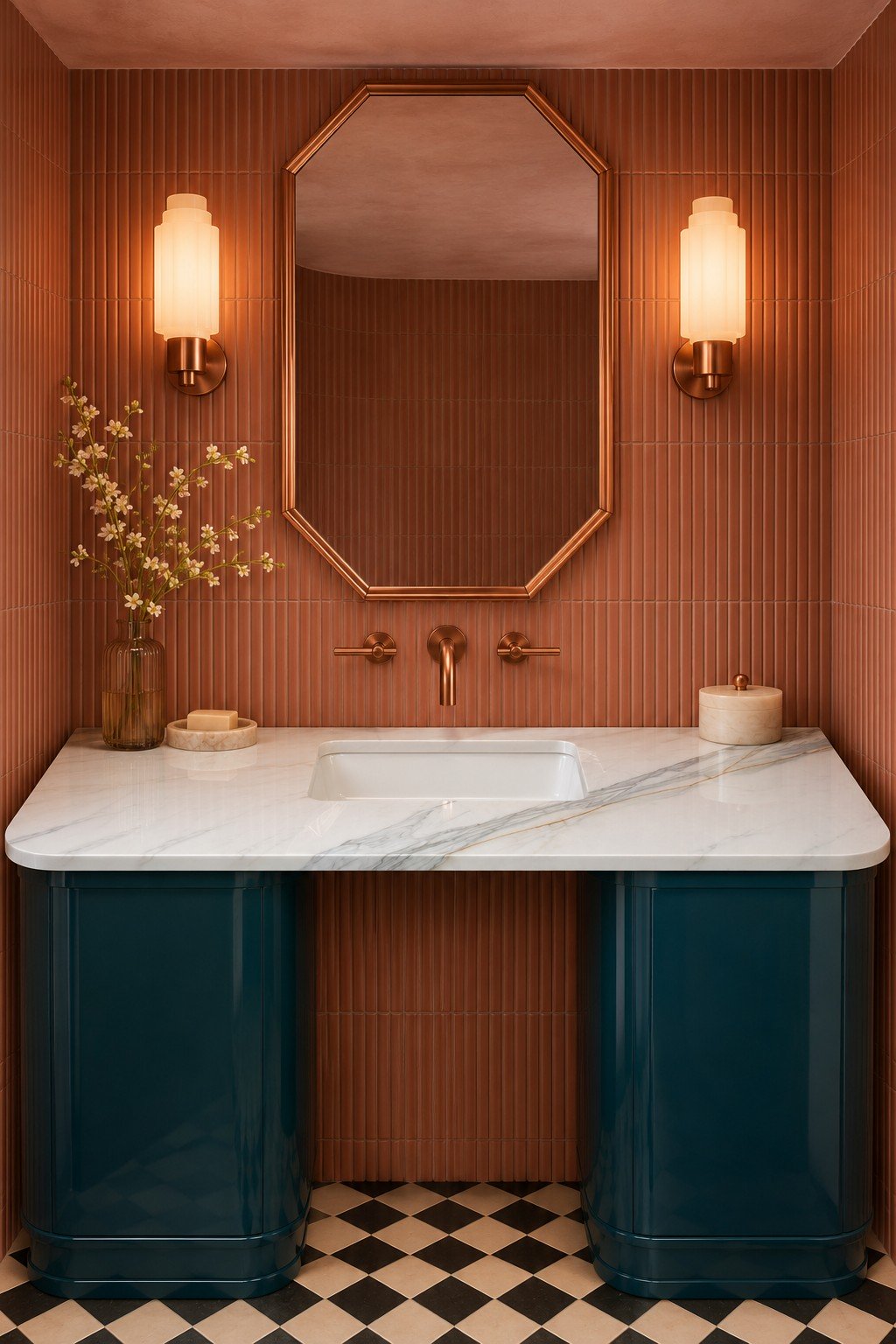
Calacatta marble console in an Art Deco-inspired bathroom
Choosing marble for your project
Start with the full slab. A sample shows color and finish, while the full slab reveals how a vein might cross an island, turn down a waterfall edge or frame a fireplace opening. If your project takes several slabs, view them together before settling on the layout.
Visit Omega Natural Stone in Farmers Branch, Texas. Bring your plans, cabinet samples or inspiration photos to the showroom and see how each slab works with the rest of your project. If the Italian marble you’re looking for is out of stock, Omega Natural Stone can special-order it for you.