

08 Nov Mont Blanc Quartzite
The Many Expressions of White
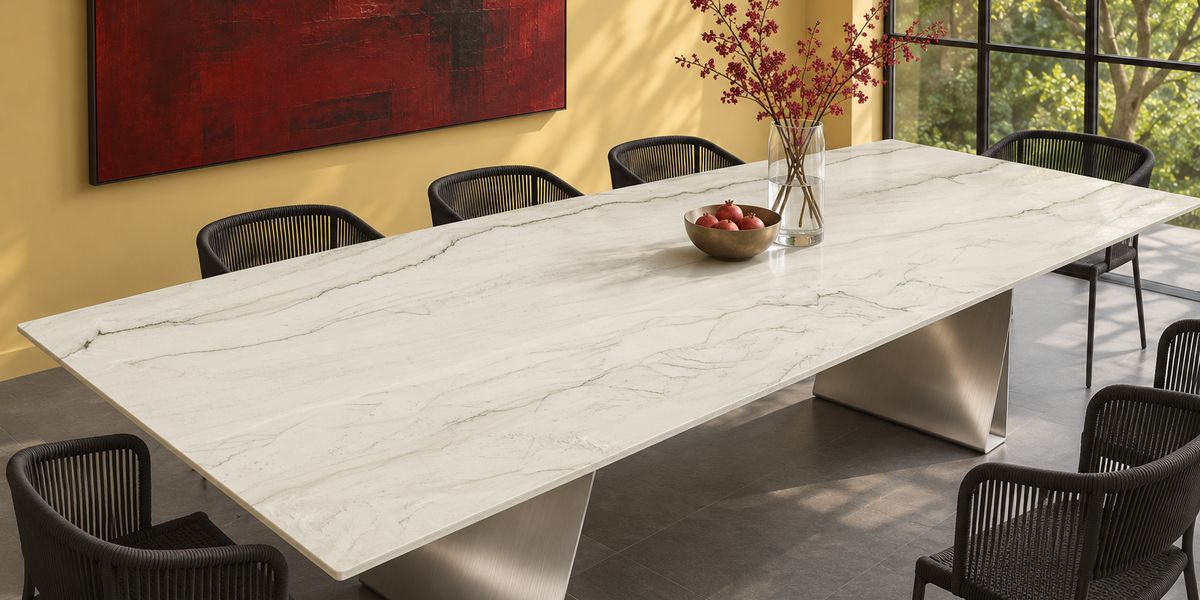
A white countertop can change the way an entire room feels. Some stones create sharp contrast; others soften the transition between cabinetry, flooring, and light. Mont Blanc quartzite offers that softer approach, with a milky background and gray veining that brings detail without demanding a room full of competing finishes. Quarried in Brazil, it is often chosen for its marble-like appearance and the practical qualities of quartzite.
Exploring Mont Blanc also introduces names such as Bianco Superiore and Le Blanc. These belong in the same conversation about pale Brazilian quartzites, but their names do not establish fixed grades or identical origins. Some suppliers use the names interchangeably, while others offer them as separate selections. The individual slab remains the best guide to color, movement, and suitability.
Brazilian Stone with a Crystalline Foundation
Despite its Alpine name, Mont Blanc comes from Brazil. Quartzite begins as quartz-rich sandstone, transformed by geological heat and pressure. As the quartz grains recrystallize and interlock, the stone develops the hardness and abrasion resistance associated with this material.
That formation gives quartzite a different character from marble. Its pale surface may suggest the softness of marble, but genuine quartzite generally provides greater resistance to scratching and household acids. However, hardness and stain resistance are different properties: a hard quartzite can still absorb liquids, making proper selection, fabrication, and sealing important.
Mont Blanc Bianco Superiore and Le Blanc
These selections share a light palette, yet the effect can vary considerably between bundles.
| Selection | Typical visual character | A design direction to explore |
| Mont Blanc | Milky white with fine gray lines, soft shading, and occasional stronger charcoal movement | Smoked wood, graphite cabinetry, and brushed nickel |
| Bianco Superiore | Milky white with gentle tonal variation and elegant veining | Natural oak, muted green cabinetry, and warm metal accents |
| Le Blanc | White to off-white with flowing movement; some selections feature more pronounced veins | Deep blue cabinetry, warm neutral walls, and bronze details |
Mont Blanc’s gray-to-charcoal veining, Bianco Superiore’s milky coloring, and Le Blanc’s off-white background are useful starting points—not promises that every slab will look the same. Compare actual slabs side by side rather than choosing from the name alone.
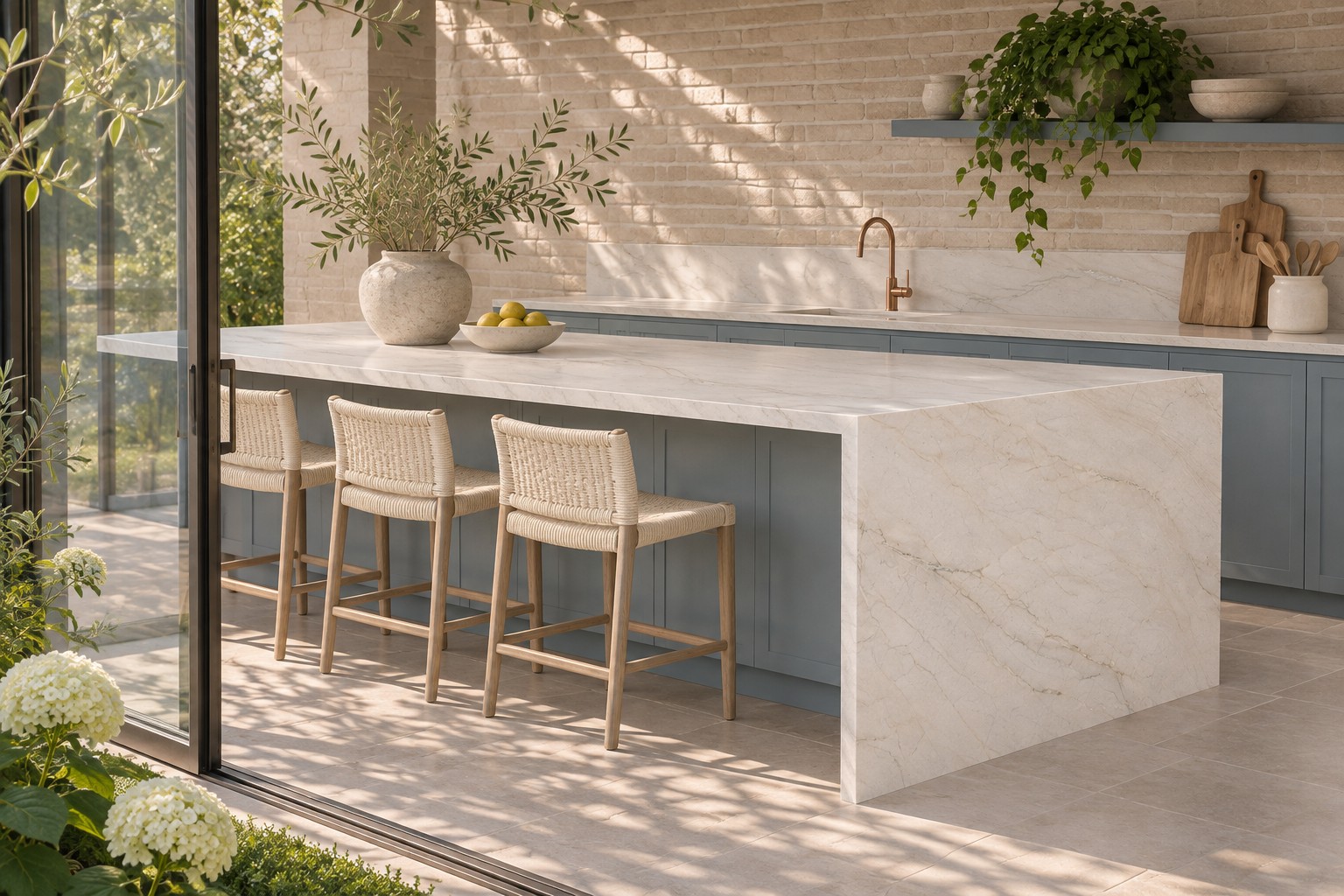
Bianco Superiore is especially appealing when a room needs brightness with some softness. Its gentle shifts in tone can connect painted cabinetry with natural wood, avoiding the abrupt transition that a flat white surface sometimes creates.
Le Blanc offers another interpretation of the pale quartzite look. A selection with stronger movement can become the room’s focal point; a quieter slab can support expressive cabinetry, lighting, or furniture. Neither name should be treated as an automatic upgrade over Mont Blanc.
Designing Around the Undertone
The most useful question is not simply, “Is this stone white?” It is, “What kind of white is it?”
A cooler slab with silver-gray movement can complement stainless steel, pewter hardware, and blue-gray cabinetry. A warmer selection may sit more comfortably beside cream paint, natural oak, or aged brass. Bring cabinet samples and flooring finishes to the slab viewing: a white that looks neutral in isolation can appear warmer or cooler beside another material.
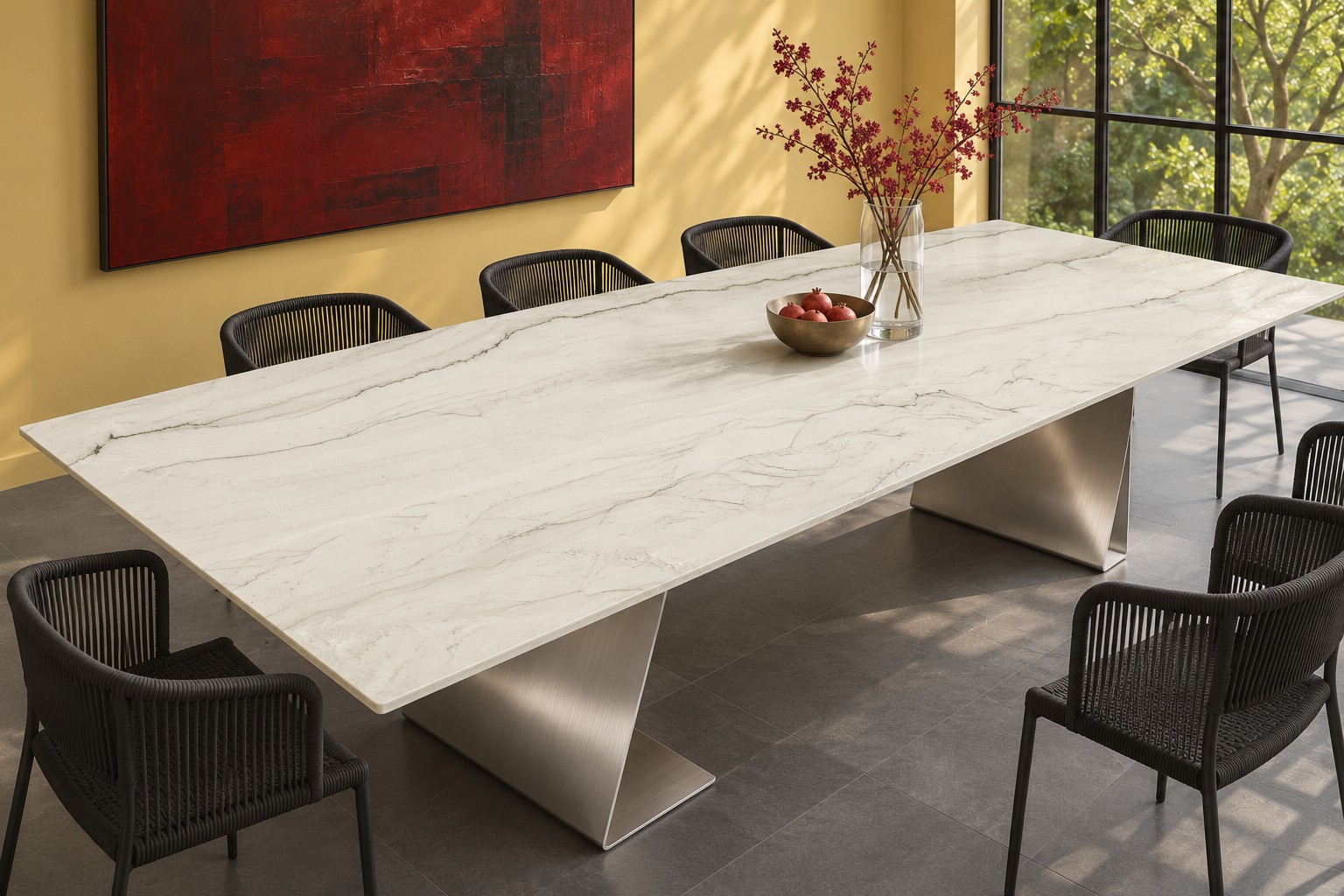
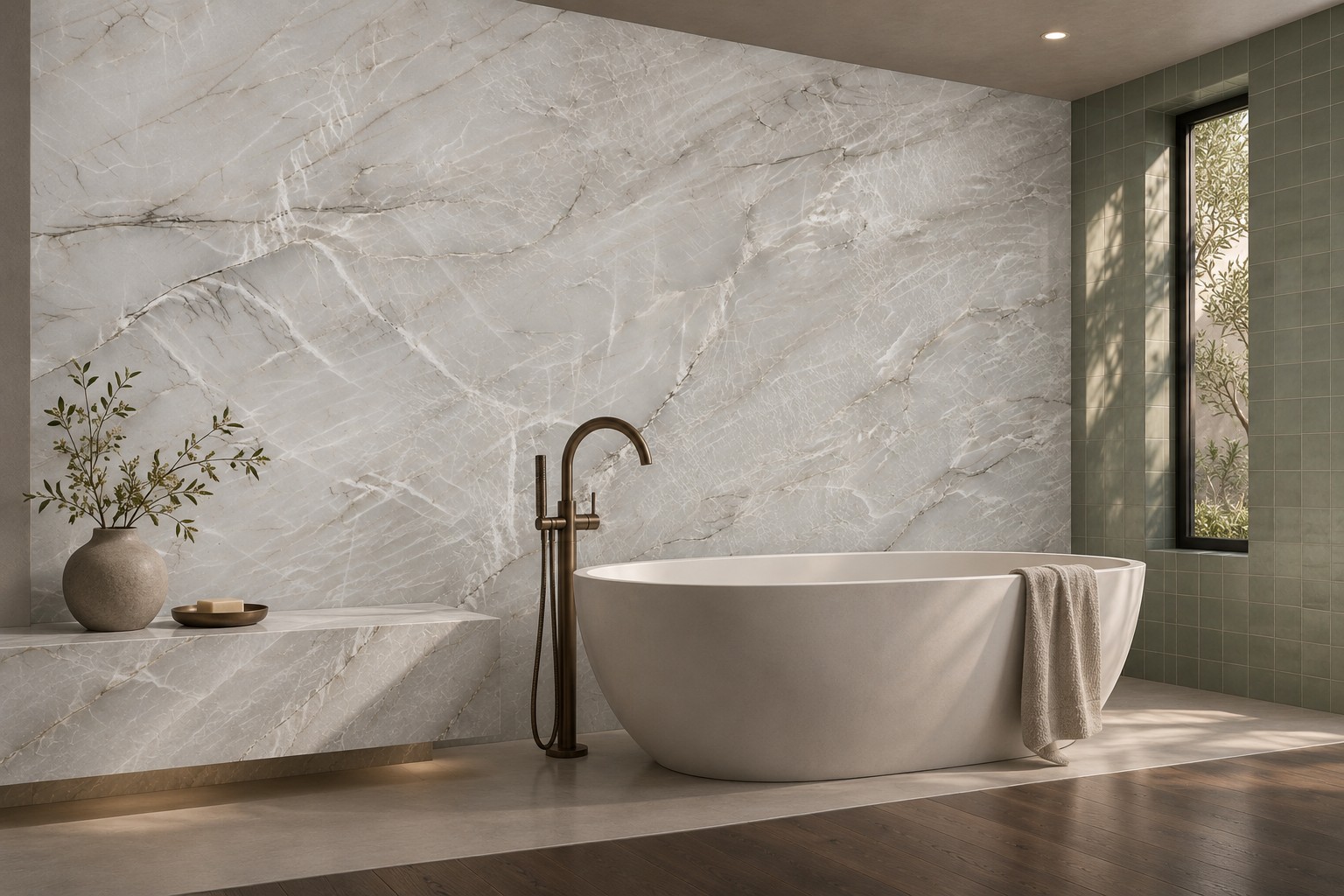
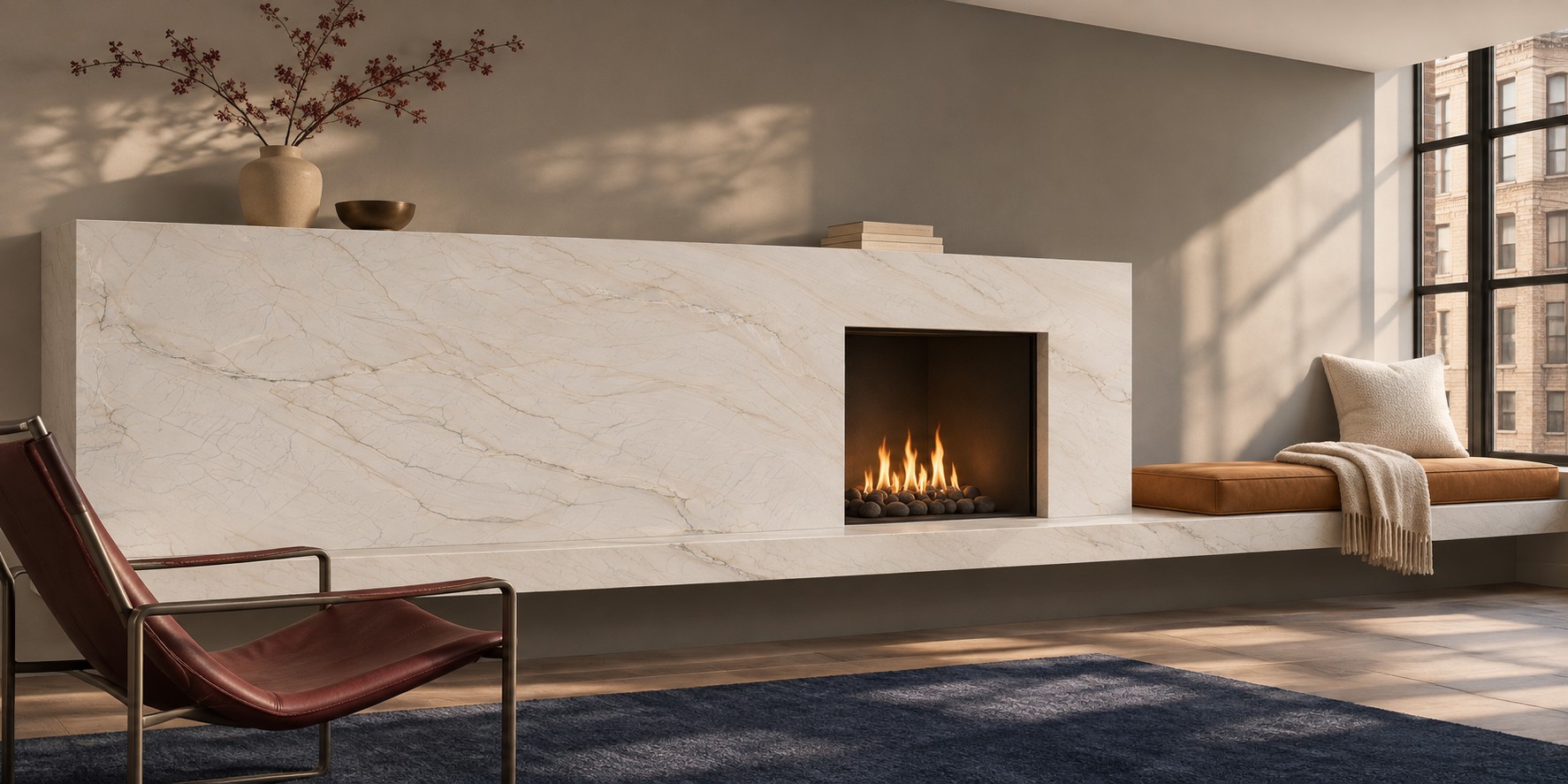
For a kitchen, consider extending the stone onto the backsplash to show more of its drawing. In a bathroom, a broad vanity top and restrained wall finish allow the crystalline texture to become the detail. On a fireplace surround or custom table, a carefully selected section can give the stone a presence beyond the countertop.
Finish also changes the result. Polished surfaces emphasize reflected light and mineral detail. Honed or leathered finishes, where available, offer a more subdued appearance. Review a finished sample because texture and sheen can alter how the background and veins are perceived.
Find Your Expression of White
Mont Blanc, Bianco Superiore, and Le Blanc offer more than three names for a light surface. They invite a closer look at the details that shape a room: the temperature of the background, the spacing of the veins, and the balance between quiet areas and movement.
What Everyday Ownership Looks Like
Mont Blanc and related white quartzites can be practical choices for working kitchens, but they should not be described as maintenance-free. Absorption varies among quartzites, and pale surfaces can make absorbed oils or moisture more noticeable. Sealing requirements should follow the selected material and the sealer manufacturer’s guidance rather than a universal yearly schedule.
A straightforward routine helps preserve the surface:
- Clean with a pH-neutral stone cleaner and a soft cloth.
- Blot oil, wine, coffee, and food spills promptly.
- Use cutting boards and trivets.
- Avoid abrasive pads and harsh cleaners.
- Ask your fabricator about sealing the surface, cut edges, and sink openings.
Arizona Tile specifically recommends sealing Mont Blanc’s cut edges during installation—a useful reminder that protection involves more than the visible countertop surface.
Compared with conventional marble, genuine quartzite generally offers better resistance to acid etching and scratching. Still, mineral inclusions, surface treatments, and differences between materials sold under similar names make a representative sample valuable. Ask your supplier to confirm the material’s classification and discuss its expected performance before fabrication.
Visit Omega Natural Stone, The Stone Boutique, in Farmers Branch to explore available white quartzite selections. Bring your cabinet and flooring samples, and discover which slab brings your palette together.