

25 Oct A Buyer’s Guide to Stone Slabs
The right surface brings together the look you love and the performance your space needs. Whether you are planning a kitchen, bathroom, fireplace surround, or feature wall, choosing a slab involves more than picking a color.
Granite, quartz, marble, quartzite, porcelain, soapstone, and onyx each offer a different combination of appearance, maintenance, and design possibilities. This guide will help you compare your options, prepare for a showroom visit, and coordinate your selection with your designer and fabricator.
Start With How You Will Use the Space
Before comparing materials, think about what your surface will experience every day. A busy kitchen may need a different surface from a decorative wall. A bathroom vanity faces different conditions from an outdoor countertop. Ask yourself:
- Will this surface be used for cooking, entertaining, or mainly decoration?
- How much routine maintenance am I comfortable with?
- Do I prefer a surface that stays visually consistent, or do I appreciate a natural patina?
- Will the installation face sunlight, moisture, heat, or outdoor weather?
- Does my budget include fabrication and installation as well as the slabs?
Share these answers with your stone supplier. They help narrow the selection to materials appropriate for your project.
Understand Your Material Options
Natural stone is quarried from the earth, while engineered quartz and porcelain are manufactured surfaces. All can offer beautiful results, but their properties and care requirements differ.
| Material | Appearance and appeal | What to consider before buying |
| Granite | Natural mineral patterns ranging from subtle speckling to dramatic movement. | Often a practical countertop choice. Absorption and sealing needs vary by stone. |
| Engineered Quartz | A manufactured surface offering consistent patterns, solid colors, and stone-inspired designs. | Typically does not need sealing. Protect it from excessive heat and confirm suitability for sunlight or outdoor exposure with the manufacturer. |
| Marble | Distinctive veining and a classic appearance that develops character over time. | Acids can etch the surface, and scratching or staining may occur. Choose it with an understanding of its maintenance. |
| Quartzite | Natural stone with looks ranging from understated neutrals to bold colors and movement. | Generally hard and durable. Verify the material identification and ask about absorption, treatments, and sealing. |
| Porcelain | A manufactured surface available in stone-inspired patterns and other designs. | Product thickness, edge construction, fabrication, and installation requirements matter. Check whether the pattern continues through the body. |
| Soapstone | A soft, tactile appearance, often in gray tones with distinctive veining. | Generally nonporous, but softer than many countertop stones and prone to scratches or dents. Oiling is optional for appearance. |
| Onyx | Dramatic bands of color and, in suitable slabs, translucency that allows backlighting. | Decorative onyx is delicate and acid-sensitive. Discuss suitability carefully for heavily used or wet areas. |
| Travertine / Limestone | Earthy colors, subtle movement, and textured or softly finished surfaces. | Usually more porous and acid-sensitive. Finish, filling, sealing, and intended use require careful consideration. |
Treat this comparison as a starting point. The specific slab or manufactured product—and the way it is installed—should guide the final decision.
Choose the Actual Slab Not Just a Small Sample
Samples help narrow your preferences, but they cannot show the full character of a large surface. Natural stone can vary considerably between slabs. Manufactured surfaces can also have pattern repeats, directional designs, or differences between production batches.
When viewing material, look for:
- Overall color: Compare undertones beside your cabinets and flooring.
- Pattern scale: Consider how large veins or mineral features will look across the finished surface.
- Consistency: Review all slabs needed for the project together.
- Surface details: Ask about visible fissures, filled areas, resin treatments, or repairs.
- Usable dimensions: Have your fabricator confirm that the layout fits the available material.
A natural feature is not automatically a defect, but it should be understood before purchase. Ask your fabricator to assess anything that could affect cutting, placement, or performance.
Buying tip: Photograph the complete slab and its identification label. Keep both with your project records.
Compare Finishes in Person
Finish affects how a surface reflects light, feels to the touch, and shows everyday marks.
| Finish | General appearance | What to evaluate |
| Polished | Smooth and reflective, often emphasizing color and pattern. | Reflections, visible marks, and how the finish looks under your room’s lighting. |
| Honed or matte | A smooth surface with reduced shine. | Color depth, fingerprints, and the care requirements of the specific material. |
| Leathered or brushed | A textured surface that adds tactile interest. | Texture consistency, cleaning needs, and suitability for the intended use. |
Not every finish is available or appropriate for every material. A matte porcelain surface, for example, should not be assumed to behave like honed natural stone.
Coordinate With Your Other Design Choices
Your countertop or feature wall should work with the whole room.
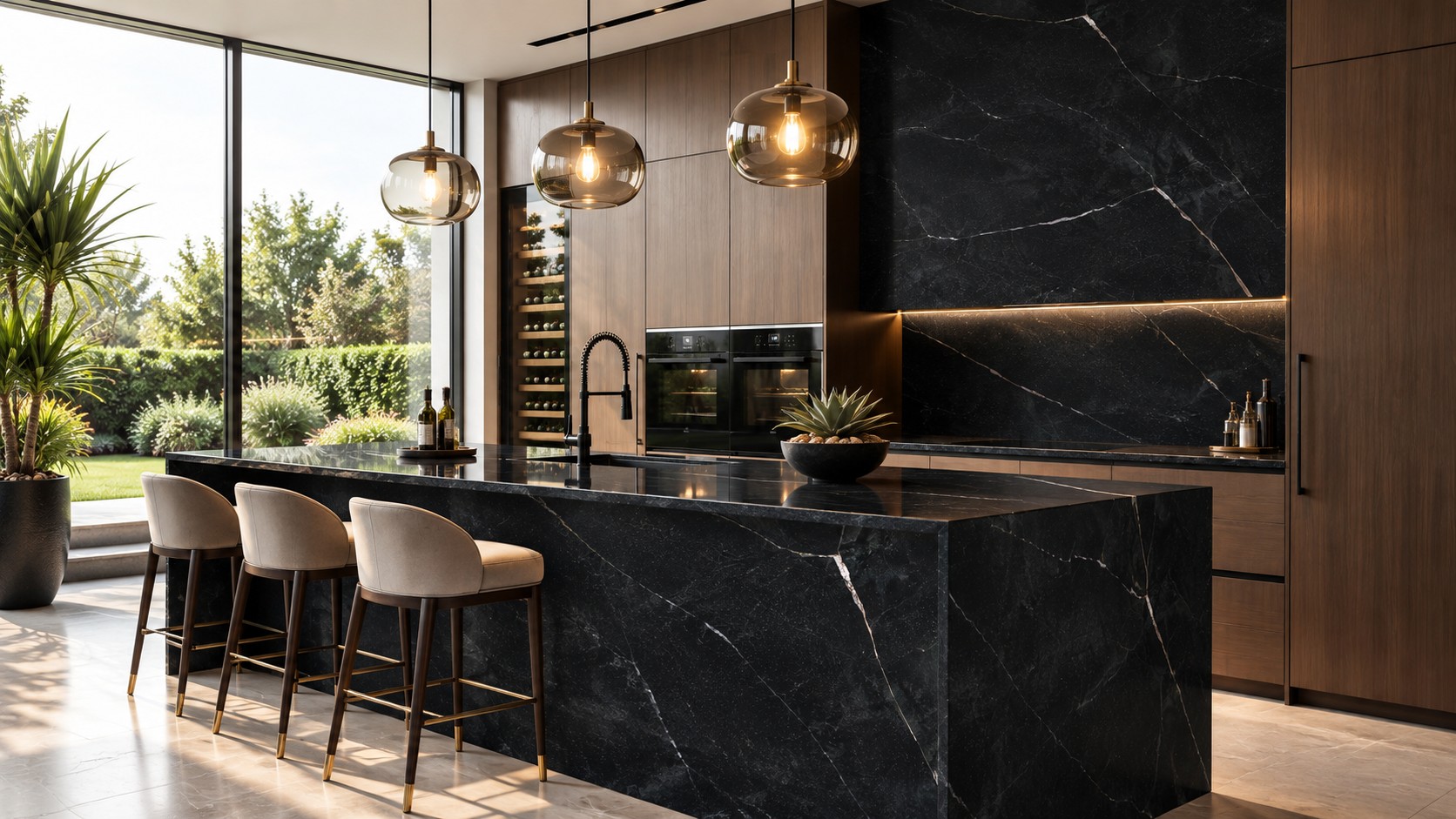
Botanic Green Soapstone design inspiration — dark surfaces paired with warm wood cabinetry.
Bring physical samples of cabinet finishes, flooring, backsplash materials, and paint whenever possible. Compare them directly against the slab, paying attention to warm and cool undertones.
If the stone has strong movement, consider whether surrounding finishes should be quieter. If the surface is subtle, cabinetry, lighting, and hardware can provide contrast.
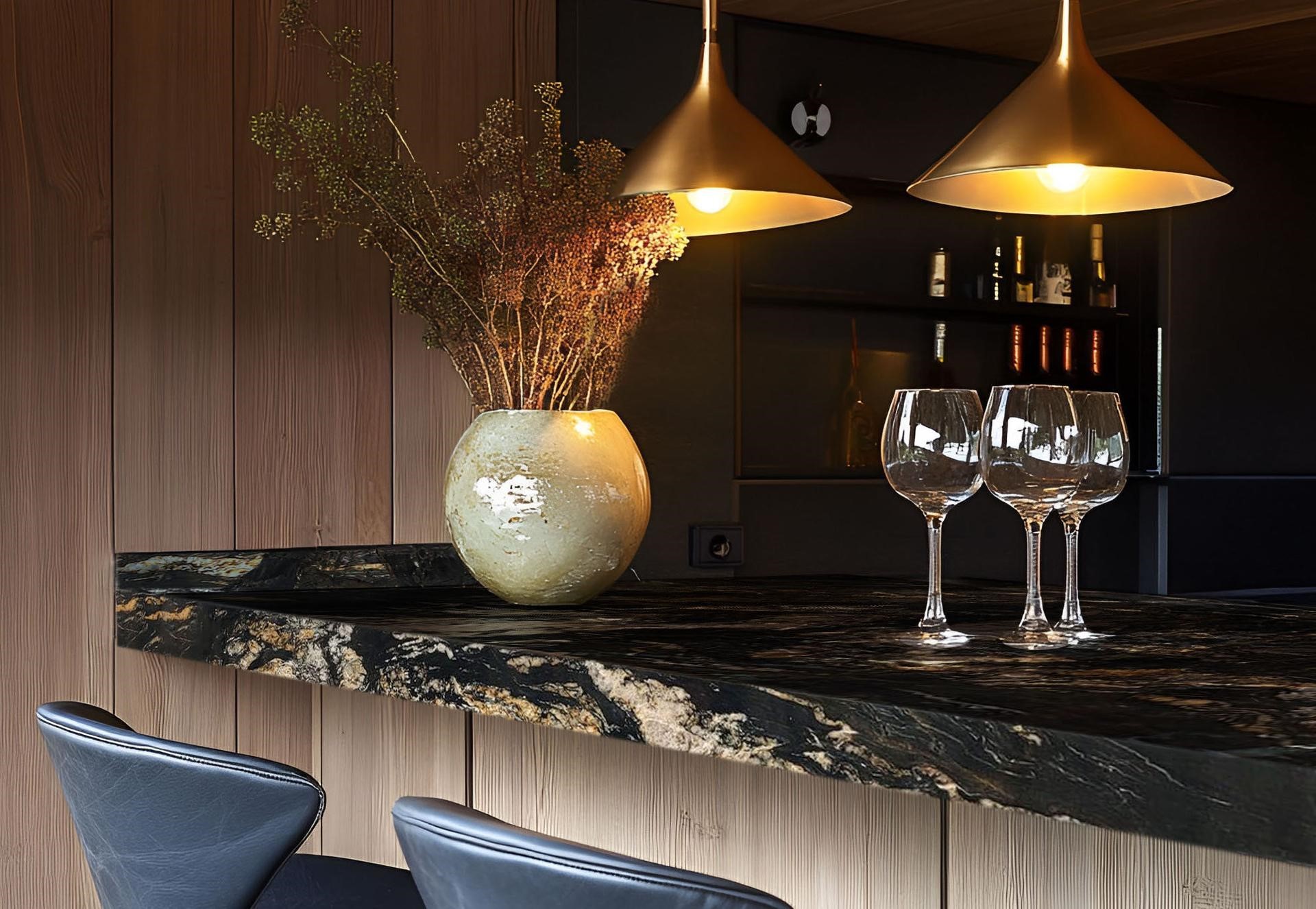
Tropical Storm kitchen inspiration — expressive stone movement with simple cabinetry and warm lighting.
Photos are useful for reference, but screens and showroom lighting can change how colors appear. When samples are available, view them in the room where the material will be installed.
Plan the Layout Before Finalizing Your Purchase
Slab selection and fabrication planning should happen together. Your fabricator needs to confirm how the pieces will fit, where seams will fall, and whether the material can support your intended design.
Discuss these details early:
- Slab quantity: How many slabs are needed for the complete layout?
- Seams and veining: Where will seams appear, and how will patterns align?
- Edges: Which edge profiles suit the material and thickness?
- Cutouts: How will sinks, cooktops, and fixtures affect the layout?
- Overhangs and support: What structural support does the design require?
- Matching features: Should waterfall panels, backsplashes, or adjacent surfaces be selected together?
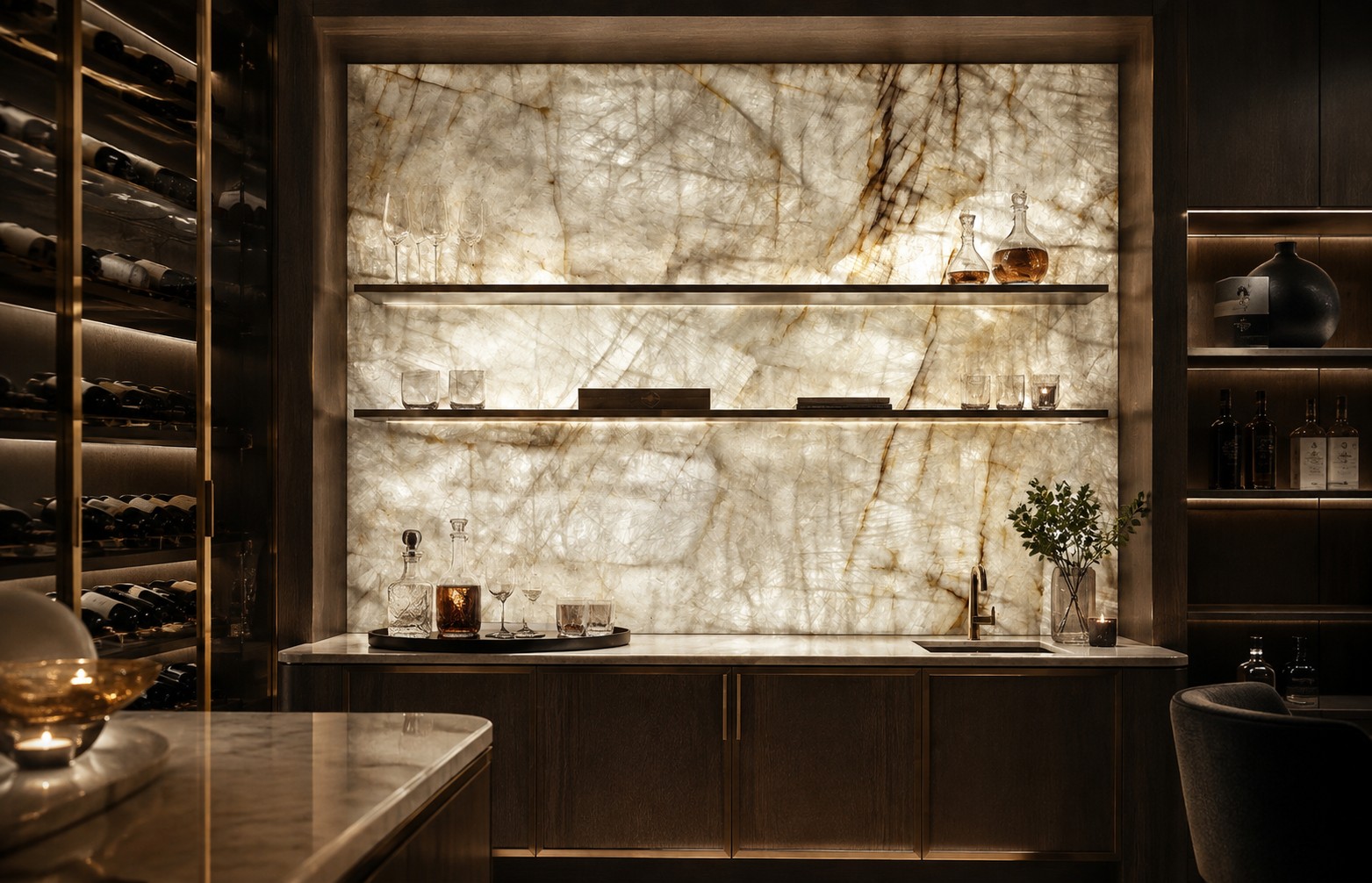
Crystal Cathedral design inspiration — plan lighting and slab layout together for an illuminated feature wall.
For bookmatching or backlighting, involve the fabricator and relevant installation specialists before purchasing. These features depend on the selected material and careful planning.
Ask to approve the proposed cutting layout before fabrication begins, especially when you want a particular area of the slab featured.
Compare Complete Project Costs
The material price is only one part of the finished project. When reviewing estimates, ask whether they include:
- Slabs and any minimum purchase quantities.
- Measuring or templating.
- Fabrication and edge details.
- Sink, cooktop, and fixture cutouts.
- Backsplashes and waterfall panels.
- Delivery and installation.
- Removal of existing surfaces.
- Additional support, preparation, or specialty lighting.
Compare quotes using the same scope. A lower material price may not mean a lower installed cost if the design requires more slabs or specialized fabrication.
Confirm slab requirements with your fabricator before making the final purchase.
Understand Care Before You Commit
Choose a material whose maintenance requirements fit your expectations.
Sealing, stain resistance, scratch resistance, and acid resistance are different issues. For example, a sealer may help reduce absorption in some natural stones, but it does not prevent acid etching on marble or decorative onyx.
Before installation, request written guidance covering:
- Recommended cleaners and products to avoid.
- Whether sealing is needed.
- How to assess when resealing may be appropriate.
- Heat protection and everyday use.
- Care for the selected finish and any surface treatments.
- Who to contact if damage or staining occurs.
Use cutting boards and trivets, clean spills promptly, and follow the material-specific instructions provided by your fabricator or manufacturer.
Your Showroom Visit Checklist
Bring the following to make your visit more productive:
- Cabinet, flooring, paint, and backsplash samples.
- A drawing with approximate dimensions.
- Photos of the room and its lighting.
- Your preferred colors and inspiration images.
- A target budget and project timeline.
- Your designer’s or fabricator’s contact information.
Before leaving, record your preferred slab identification numbers, confirm availability and reservation terms, and clarify who will handle the next step.
Find the Right Surface at Omega Natural Stone
The best surface is one that suits your design, your space, and the way you live.
At Omega Natural Stone, we help homeowners, designers, builders, and fabricators explore slab options for projects throughout Dallas–Fort Worth. Bring your samples and ideas to our showroom, and ask our team about current selections and sourcing options for your project.
Omega Natural Stone — The Stone Boutique
12901 Nicholson Road, Suite 300
Farmers Branch, TX 75234
214-660-5393 | sales@omeganaturalstone.com
A superior surface for every space.